
Time Loop Hunter
Play Time Loop Hunter
Time Loop Hunter Screenshots



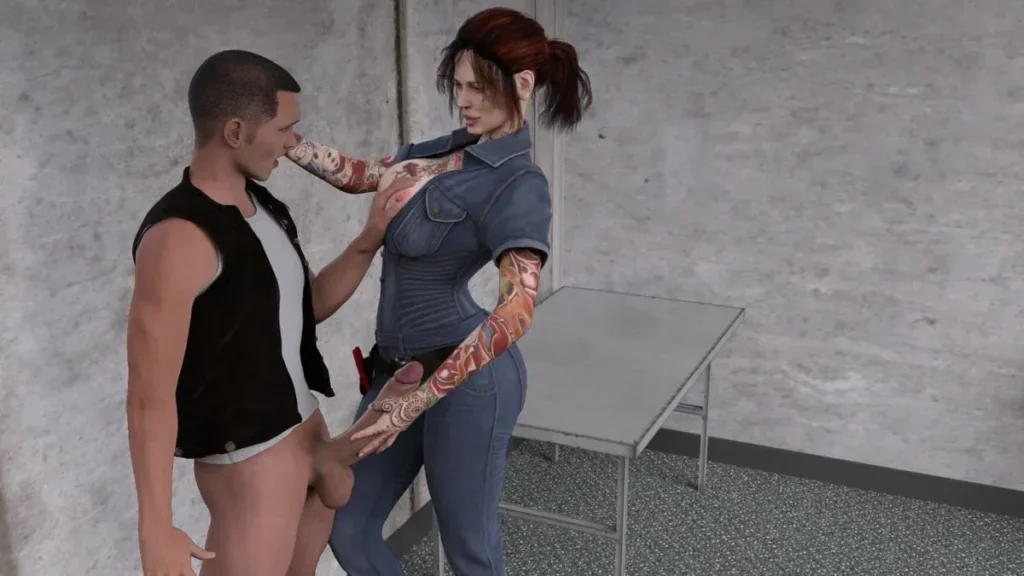



Time Loop Hunter review
Master the Addictive Loops and Thrilling Challenges
Ever found yourself trapped in an endless cycle of pursuit, strategy, and steamy rewards? That’s the thrill of Time Loop Hunter, the gripping adult game where you rewind time to perfect your hunts. I remember my first loop—heart pounding as I dodged traps and closed in on targets, only to unlock mind-blowing scenes that kept me coming back. This guide dives deep into Time Loop Hunter mechanics, strategies, and secrets to help you dominate every cycle. Whether you’re new or looping like a pro, get ready to elevate your gameplay and savor every moment.
How Does Time Loop Hunter Work?
I still remember the exact moment Time Loop Hunter clicked for me. I was hiding behind a crate in the “Abandoned Docks” scene, watching my carefully laid plans fall apart as my target strolled right past my main trap. I was frustrated, ready to call it a night. But then I hit the rewind button. ⏪ The world blurred backwards, and suddenly I was back at the start, with all my knowledge intact. That second loop? Flawless. The rush was incredible. I was hooked, not by a single victory, but by the power to learn, adapt, and perfect. That’s the magic of this game.
So, what is Time Loop Hunter? At its heart, it’s a brilliant mix of strategic planning, stealth, and temporal power. You are the Hunter, tasked with capturing elusive targets across ever-shifting scenes. But you’re not just some run-and-gun hero; you’re a temporal architect. Your greatest tool isn’t a weapon, but the ability to rewind time itself. This Time Loop Hunter gameplay turns every failed attempt from a defeat into a vital data-gathering mission. You learn patrol patterns, experiment with trap placements, and gradually build the perfect, inescapable sequence of events.
What Makes the Core Loop So Addictive?
The genius of Time Loop Hunter lies in its perfectly crafted core loop. It’s a satisfying cycle of observation, execution, and optimization that keeps you saying “just one more try” for hours. Here’s how it breaks down:
- Scout & Plan: 🗺️ Every hunt begins with a fresh loop. You’re dropped into a scene—a mansion, a lab, a city square—with a target somewhere within it. Your first run is almost never about success; it’s about intel. You watch. Where does the target go? What paths do they take? What objects in the environment can be interacted with? This phase is all about gathering the puzzle pieces.
- Set the Stage: 🪤 Armed with initial knowledge, you start placing your tools. This is where the strategy deepens. You’ll use bear traps, noise makers, smoke bombs, and more to create a chain reaction. Do you block a door here to funnel them there? Do you trigger a distraction at exactly 2:15 PM loop-time? The time loop mechanics mean you can test these setups without consequence.
- Execute & Observe: 🎬 You set your plan in motion and watch it unfold. Maybe it works perfectly! More often, something unexpected happens—a guard takes a different turn, a trap triggers too early. But here’s the key: failure is data. You’ve just learned something critical for your next attempt.
- Rewind & Optimize: 🔄 This is the addictive core. Instead of a “Game Over” screen, you get a “Loop Reset” button. You zip back to the start, retaining all the knowledge and resources you spent. Now, you tweak. You move that trap three feet to the left. You wait two extra seconds before activating your device. Each loop is a refinement, bringing you closer to a seamless, cinematic capture.
This loop is so compelling because it replaces frustration with progress. Every second spent in-game feels valuable. You’re constantly learning, and your character’s progression through unlocks is mirrored by your own growth as a player. You’re not just grinding for points; you’re solving a dynamic, living puzzle.
Mastering Time Rewinds and Progression
Understanding how to play Time Loop Hunter effectively comes down to mastering two interconnected systems: the rewind and your long-term progression.
The Time Rewind Strategy: Your Superpower
Think of the rewind not as a simple “undo” button, but as your laboratory. A smart time rewind strategy separates beginners from masters.
Pro Tip: Your first loop of any new scene should be a “dry run.” Don’t even try to capture the target. Just follow them, map their route, and note key timings. This initial investment saves countless loops later.
Don’t be afraid to rewind often and for small reasons. Saw a new patrol path? Rewind to adjust. Realized a better choke point? Rewind. The game encourages constant experimentation. The most efficient hunters are those who use short, focused loops to test individual parts of their plan before stringing it all together into one glorious, final run. 🏆
Progression: Growing Stronger Every Loop
While your personal skill is the biggest upgrade, the game also offers tangible progression that makes previously tough scenes manageable. As you complete captures, you earn rewards to:
* Upgrade Your Gear: Make traps activate faster, last longer, or affect a wider area.
* Expand Your Storage: Carry more tools into each loop, allowing for more complex, multi-stage plans.
* Unlock New Scenes & Tools: The core gameplay expands, introducing new environmental hazards and gadgets that change your strategic options.
This system means you’re never truly stuck. If a scene is too challenging, you can go replay an earlier one to farm resources for upgrades, then return with a significant edge. It’s a fantastic way to balance challenge and player agency.
| Mechanic | Description | Tips |
|---|---|---|
| Time Rewind | Resets the scene to its starting state while you keep all learned information and spent resources. | Use it liberally to test ideas. A rewind is not a failure, it’s a step in your plan. |
| Trap Chaining | Setting devices to trigger in sequence to guide a target to a specific location. | Start from the capture point and work backwards. Plan the final step first. |
| Resource Management | You have limited inventory slots for tools each loop. | Prioritize versatile tools early on. Don’t bring a specialized item unless your plan requires it. |
| Environmental Interaction | Many scene objects (doors, lights, machines) can be used to influence target movement. | On your scout run, interact with everything to see what it does. A locked door is a great path blocker. |
Common Beginner Mistakes to Avoid
When you’re first learning how to play Time Loop Hunter, it’s easy to fall into a few traps (pun intended). Here’s what to watch out for:
- The Perfectionist First Loop: 🚫 Trying to get everything perfect on your very first try is a recipe for frustration. Embrace the scout run! Gather information without pressure.
- Ignoring the Clock: ⏰ Many target routes are timed. Planting a trap at a location is useless if the target passes by at a different time. Pay close attention to the in-loop clock and movement patterns.
- Poor Resource Allocation: Bringing every tool “just in case” leaves no room for adaptability. Craft a hypothesis for your loop (“I will funnel them through the kitchen”), and pack the tools that support that plan.
- Forgetting to Adapt: The Time Loop Hunter core loop is about adaptation. If your plan isn’t working after 2-3 rewinds, it might be fundamentally flawed. Don’t just make tiny tweaks; sometimes you need to scrap the approach and try a completely new path or tool.
- Underusing the Environment: 🚪 You are not alone in the scene. Often, the best tools are already there—a door to lock, a vehicle alarm to trigger, a noise-making piano. Integrating these into your plan is often more efficient than using your limited personal inventory.
Let me paint a picture of a successful hunt using everything we’ve discussed. Your target is in a museum. Loop 1: You follow, learning they check the gem exhibit at 1:00, then the cafe at 1:20. Loop 2: You place a noise maker in the hall toward the staff room at 1:19. You lock the cafe’s back door. Loop 3: You adjust the noise maker’s timing by 2 seconds. You add a smoke bomb at the staff room entrance. Loop 4: It all comes together. The noise diverts them, the locked door guides them, the smoke bomb covers your final move—capture! That journey from confused observer to temporal conductor is Time Loop Hunter gameplay.
The balance is everything. The action is in the tense moments of execution, but the strategy is in the peaceful, rewindable space between tries. 🧠⚡
Your First Hunt Action Plan:
1. Enter a scene and just watch. Take mental notes for a full target cycle.
2. Rewind. Pick one small thing to test. “Can I lock this door to change their path?”
3. Rewind. Add another element based on what you learned.
4. Build slowly. Connect two, then three successful actions.
5. Spend your earnings on one upgrade at a time, focusing on your most-used tool.
FAQ
Q: How many mistakes can you afford per loop?
A: As many as you need! The beauty of the time loop mechanics is that mistakes have no permanent cost. Each loop is a fresh sheet. The only cost is your time, and even that isn’t wasted, as you’re always learning.
Q: Do I lose my tools when I rewind?
A: No! This is a crucial part of the Time Loop Hunter core loop. Any tools you place or use are refunded when you rewind. You only lose a tool if you discard it manually within the loop. Spend them freely to experiment.
Q: What’s the main goal in every scene?
A: The primary objective is always to capture the main target. However, many scenes have optional side objectives or challenges (like a faster completion time or using fewer tools) that yield bonus rewards. Focus on the main capture first.
Q: I’m stuck on a scene. What should I do?
A: First, go back to pure observation—you may have missed a pattern. Second, check your upgrades; perhaps a better trap or more storage would help. Third, consider a completely different approach using tools you haven’t tried much. The solution often lies in a change of perspective.
Q: Is the game just about repeating the same thing?
A: Not at all. While you repeat loops, the gameplay is about dynamic problem-solving. Each loop incorporates new knowledge, leading to a different action. It’s like solving a puzzle where you get to redesign the pieces slightly between attempts until they fit perfectly.
Diving into Time Loop Hunter transformed my gaming nights into epic sagas of strategy and excitement. From perfecting those time rewinds to unlocking every hidden reward, you’ve got the tools to conquer the loops. My top tip? Experiment boldly—each failure is just setup for triumph. Grab the game, start hunting, and share your wildest loop stories in the comments. What’s your record run? Let’s loop together and push the boundaries!