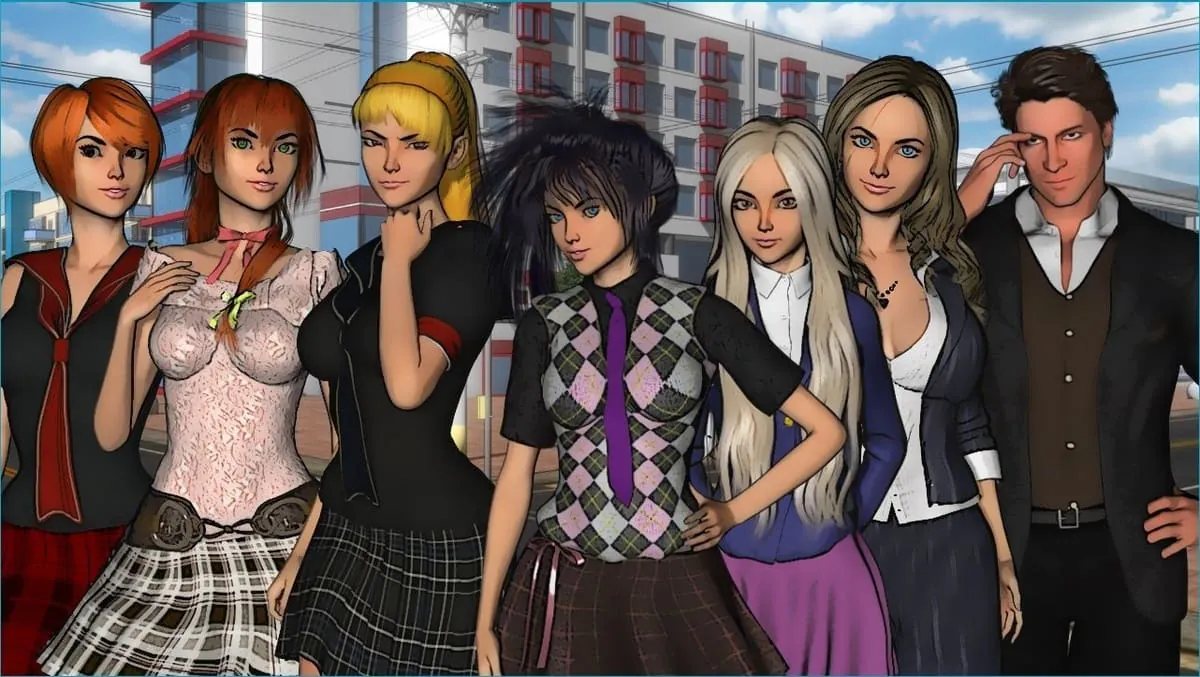
The Fate of Irnia
Play The Fate of Irnia
The Fate of Irnia Screenshots
The Fate of Irnia review
Dive into a Fantasy World of Romance, Power, and Destiny-Shaping Decisions
Imagine inheriting a mysterious magical orb on your 17th birthday, right as orc hordes threaten your homeland of Irnia. That’s the gripping hook of The Fate of Irnia, a captivating visual novel where your every choice rewrites the story. I remember my first playthrough—heart pounding during tense council meetings, butterflies from budding romances—it felt like I was truly commanding the fate of an entire kingdom. This game blends high-stakes fantasy adventure with deep personal connections, offering branching paths, multiple endings, and intimate encounters that keep you coming back. Whether you’re a visual novel newbie or a seasoned player, discover why The Fate of Irnia stands out in its genre.
What Makes The Fate of Irnia Unmissable?
Imagine stepping out of your farmhouse door, the weight of a simple life on your shoulders, only to discover a magical orb in the barn that whispers secrets of a forgotten legacy and a world on the brink. 🏡✨ This isn’t just a game you play; it’s a world you step into, mold, and ultimately decide the fate of. Welcome to The Fate of Irnia, a narrative experience where every decision, from the seemingly trivial to the monumentally moral, carves a unique path through a land teeming with beauty, danger, and deep, personal connections.
So, what exactly is The Fate of Irnia? At its heart, it’s a story about legacy, choice, and consequence. But to call it just a story feels like an injustice. It’s a living, breathing world that reacts to you.
Unraveling the Core Story and World of Irnia
Your journey in The Fate of Irnia story begins not in a royal court or a mage’s tower, but on a humble farm. You are the child of a legendary hero, living a quiet life… until the 12-year cycle of the orc invasion Irnia fears is about to begin again. 🗡️🌾 This looming threat is the drumbeat to which the entire world marches. Your father’s mysterious past and the strange, sentient orb he left you are the keys to understanding not just the invasions, but the very soul of Irnia itself.
The magical orb mechanics are, without question, the brilliant core of this experience. This isn’t a passive tool; it’s a companion with a split personality. The red influence urges passion, aggression, and raw power, while the blue influence favors wisdom, diplomacy, and subtlety. 🟥🔵
But here’s where it gets genius: this branching narrative Irnia is famous for is deeply tied to your orb. Its influence doesn’t just change combat abilities; it alters how you interact with the entire world. Choose red-aligned dialogue options, and you might intimidate a guard into submission. Choose blue, and you could reason your way past him. The orb’s personality shapes your social interactions, opening or closing entire avenues of the story based on which side you nurture.
To understand the scope, let’s break down the key features that make this world so rich:
* True Branching Paths: Early choices don’t just change a scene; they redirect the entire plot, leading you to different kingdoms, allies, and revelations.
* The Orb System: Your sentient guide and weapon, whose dual nature actively shapes your abilities and social standing.
* Deep Relationship Webs: Every character has a memory. Help someone, betray them, or romance them, and the world remembers, altering future interactions and available support.
* High-Stakes Consequences: There are no “illusion of choice” moments here. Decisions lock out content, create powerful enemies, and can even lead to permanent character loss.
How Player Choices Shape Your Journey
This is where The Fate of Irnia separates itself from the pack. Your choices aren’t just checkboxes for an ending slide; they are tectonic plates shifting the landscape of the game. I learned this the hard way on my second playthrough.
In my first, I was a paragon of blue-influence diplomacy. I soothed tensions and forged alliances. It felt great! So, for my second run, I thought, “Let’s see what this red influence is about.” I embraced a more confrontational, power-hungry path. I assumed I’d just be a bit ruder and get into more fights. I was not prepared for the Death route.
Without spoiling too much, a series of ruthless choices, fueled by the orb’s red whispers, led me to a point of no return. I invoked a ancient, forbidden power to crush my enemies. I won a major battle decisively, but the victory was ashes. My character was cursed, their vitality slowly draining, and key allies looked at me with horror and fear. This wasn’t a “bad ending” screen—it was a completely new arc I had to navigate, a chilling storyline about the cost of absolute power that was entirely absent from my first game. This is the power of a genuine branching narrative Irnia offers. 🤯
The game tracks everything: trust with companions, romantic entanglements, political standing with factions, and even the overall “world state.” Helping a village survive the orc invasion Irnia faces might mean those villagers show up to aid you in a later siege. Conversely, sacrificing them for tactical gain grants you a powerful but morally bleak artifact. The multiple endings Fate of Irnia boasts aren’t just A, B, or C; they are intricate tapestries woven from hundreds of threads you spun along the way.
Actionable Tip: Start a notepad, digital or physical, to track your major alliances and key decisions from the first few hours. You’ll thank yourself 20 hours later when you’re trying to remember if you helped the Blacksmith’s daughter or if you’re on good terms with the Elven Scout. This simple habit leads to significantly better outcomes.
Why Replayability Keeps You Hooked
When people ask “what is The Fate of Irnia really about?”, my answer is always: “It’s about the story you didn’t see the first time.” The replayability is not a bonus feature; it’s the core promise. Knowing that my pacifist healer’s journey was just one version of Irnia, and that a ruthless warlord’s path or a cunning spymaster’s tale exist in parallel, is utterly compelling.
Think of your first playthrough as reading an amazing book. Your second, third, and fourth are like discovering that book has hidden chapters, alternative protagonists, and different genres living inside it. The magical orb mechanics alone guarantee two fundamentally different playstyles, but the branching narrative Irnia is built on ensures that even two “red-influence” runs can diverge wildly based on who you befriend, betray, or love.
The emotional depth is staggering. Because choices are permanent and consequential, every moral dilemma hurts in the best way. Do you spare the orc chieftain who shows honor, potentially angering your human allies, or do you execute him to solidify your political standing? There’s no right answer, only your answer, and the game will make you feel its weight.
To give you a clear view, let’s look at what makes the experience shine and where some players might need to adjust their expectations.
| Strengths | Areas for Improvement |
|---|---|
| Unparalleled narrative branching where choices feel genuinely meaningful and world-altering. | The sheer scope of choices can be overwhelming for new players without guided direction. |
| The sentient orb system is a masterclass in integrating mechanics with role-playing and character development. | Early-game pacing is deliberately slow to build the world, which may test players seeking immediate action. |
| Deep, evolving character relationships that react logically to your actions and affiliations. | The high number of multiple endings Fate of Irnia has can make achieving a specific “perfect” ending a complex puzzle. |
| A rich, layered world with a compelling central mystery (the orc invasion Irnia cycle) that drives exploration. | Some plot threads are so well-hidden they require very specific, non-intuitive choices to uncover. |
🎮 For New Players Feeling Overwhelmed: Breathe. You cannot see everything in one go, and that’s the point. Embrace your first playthrough as your story. Don’t reload saves to test choices—live with the consequences. Let the surprises happen. Use that first run to learn the world and its rules. On your next journey, armed with that knowledge, you can deliberately steer toward the hidden corners you missed. Talk to everyone, revisit locations after major events, and always, always listen to your orb—it’s more than a guide; it’s the mirror of your journey.
The Fate of Irnia is an invitation to lose yourself in a world where your voice matters. It’s a testament to the power of interactive storytelling, where romance, power, and destiny aren’t just themes you witness, but tools you wield. Your epic choices aren’t just waiting—they’re already shaping the horizon.
The Fate of Irnia isn’t just a game—it’s your chance to forge legends, kindle passions, and alter destinies in a richly woven fantasy tapestry. From the orb’s whispers to the clash of orc hordes, every decision crafts a unique tale worth reliving. I dove back in three times already, each path revealing fresh thrills and deeper bonds. Ready to claim your legacy? Grab the latest version, experiment with bold choices, and share your wildest endings in the comments below—let’s swap stories and strategies!