Muse Dash Screenshots

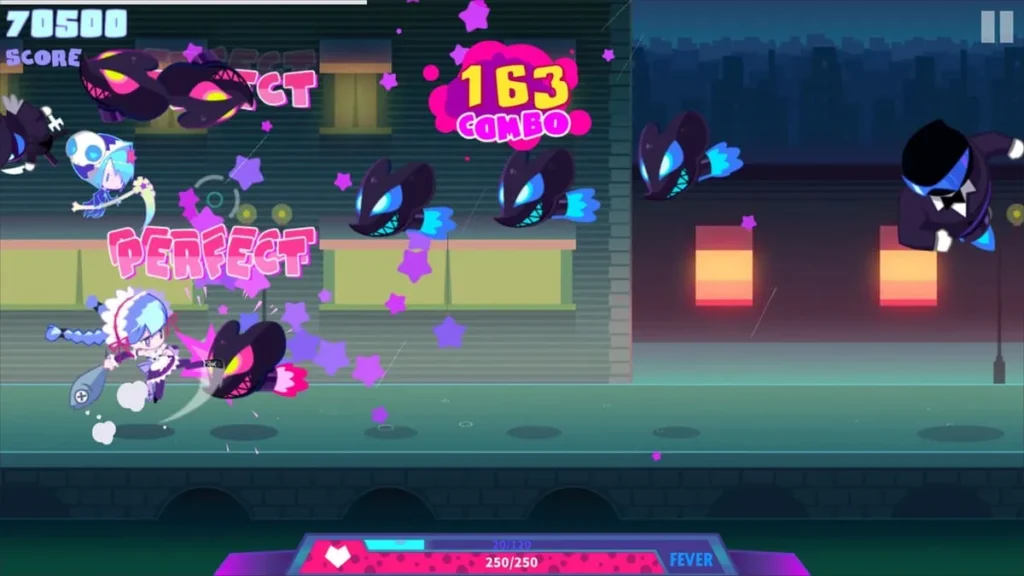
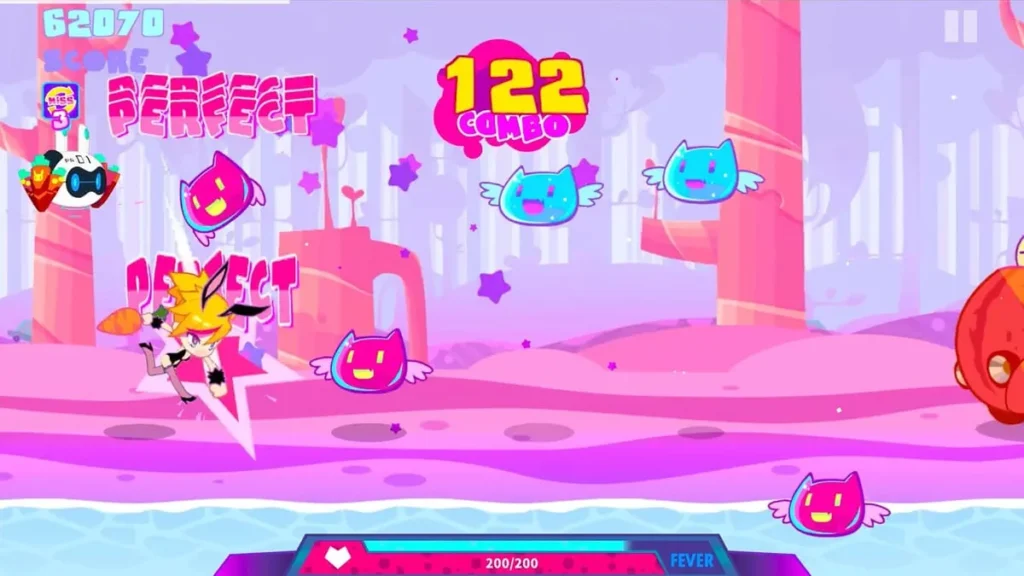
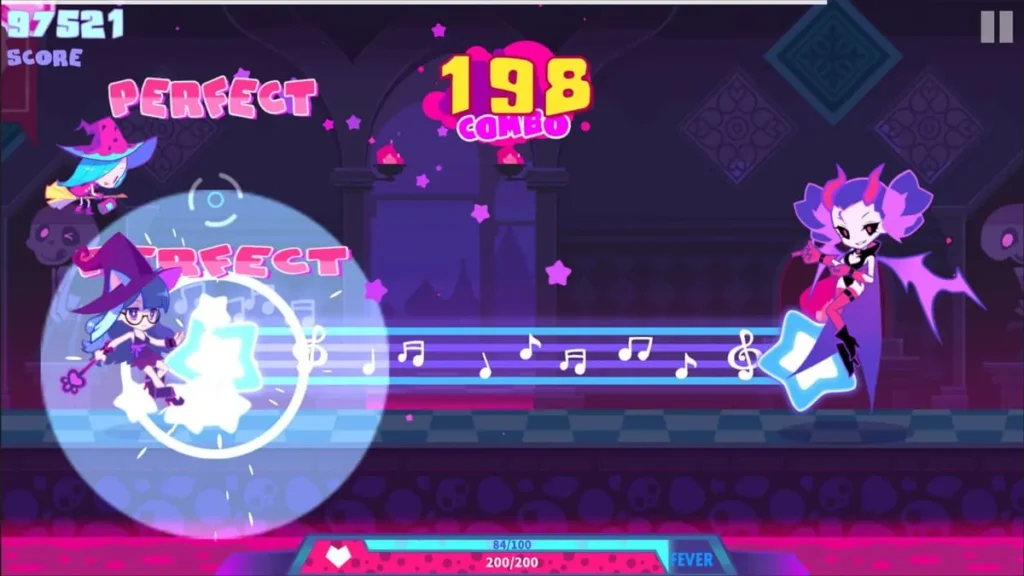
Muse Dash review
Master the Beat in This Addictive Runner
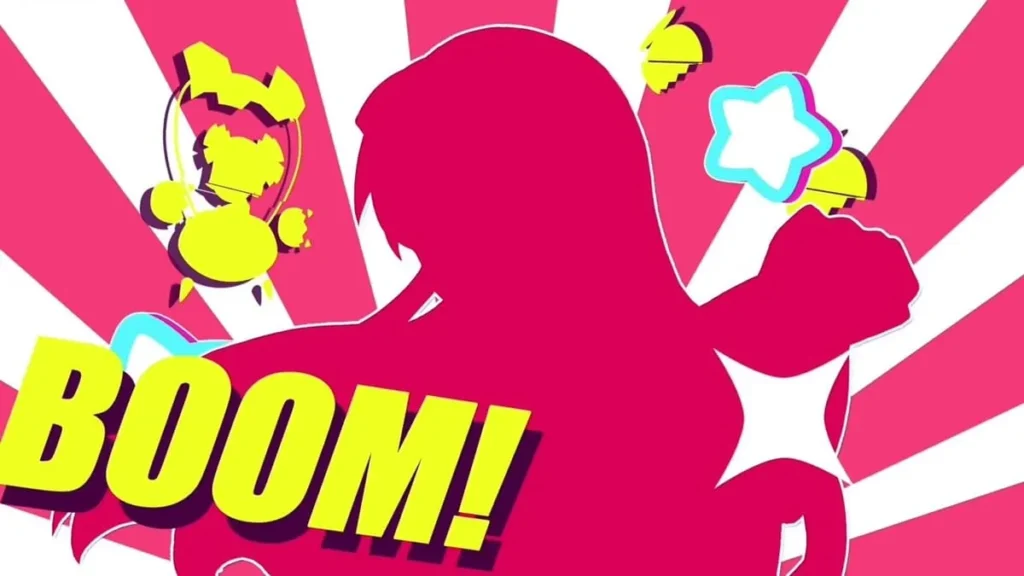
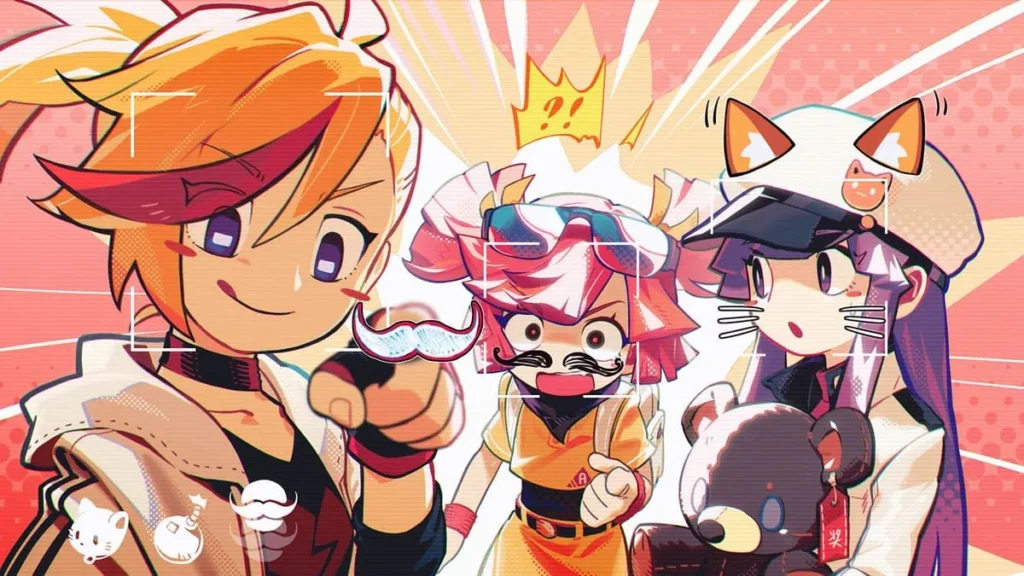
Ever felt the rush of dodging obstacles while syncing perfectly to your favorite beats? That’s Muse Dash in a nutshell—a vibrant rhythm game where you dash through colorful stages, tapping to the music to smash cute enemies. I remember my first session on PC; I was hooked after nailing a full combo on a high-energy track. With simple two-button controls, adorable heroines like Rin and Buro, and a massive song library, Muse Dash blends parkour thrills with rhythm challenges. Whether you’re a newbie or a beat master, this guide dives into strategies, characters, and secrets to elevate your score. Let’s jump in and keep the combo alive!
What Makes Muse Dash Gameplay So Addictive?
Ever pressed play on a song in a game and suddenly found it’s three hours later? 😅 That’s the magic of Muse Dash gameplay. It’s a deceptively simple, impossibly catchy loop where you’re constantly telling yourself, “Just one more track!” But what exactly hooks us in? Is it the adorable characters sprinting automatically through vibrant, chaotic stages? The thumping music? Or that incredible rush when your taps align perfectly with the beat and you finally nail that section you’ve been stuck on?
I remember my first encounter with a boss track. My screen was a storm of enemies and notes, my health bar was flashing red, and I was just mashing buttons in a panic. I must have failed that song 20 times in a row. But here’s the thing—I was grinning like an idiot every single time. There was no frustration, just the pure, joyous challenge of wanting to do better. That’s the heart of this game’s addiction. It makes mastery feel like play, and failure feel like a learning step, not a punishment. Let’s dive into the rhythm game mechanics that make this possible.
How Do Rhythm Mechanics Work in Muse Dash?
At its core, how to play Muse Dash is about becoming one with the music. You aren’t just hitting notes on a static bar; you’re an active participant in a side-scrolling runner. Your character automatically dashes forward, and your job is to handle the obstacles. The genius of the Muse Dash gameplay loop is how it translates music into action. Every enemy, every obstacle, and every glowing note is placed precisely on a beat, a half-beat, or within the song’s melody.
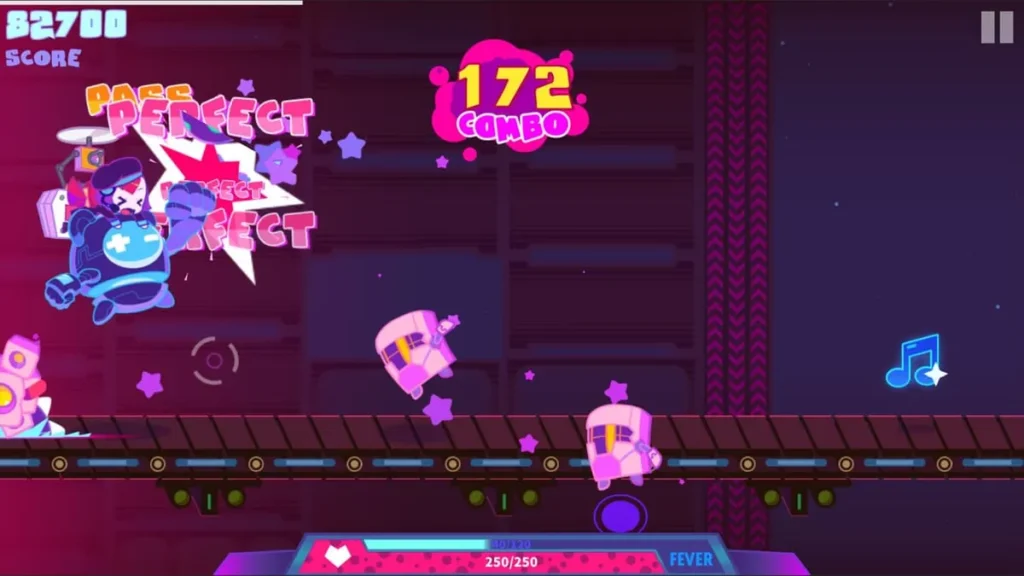
There are two primary lanes: ground and air. Enemies and notes will fly at you in these lanes, synced perfectly to the soundtrack. A ghost on the ground requires a tap, while a bat in the air requires a simultaneous press of the jump button. Then you have the elongated “hold” notes that require you to keep a button pressed, often while still managing other incoming taps. Miss an enemy or hit a trap, and your HP bar takes a hit. Let it reach zero, and the song ends. The goal? To achieve a full combo (FC), hitting every single note perfectly without breaking your chain.
The real secret sauce is the scoring and feedback. Hit notes accurately, and you build a score multiplier. Hit them perfectly on the beat, and you see a dazzling “PERFECT” splash and hear a super satisfying sound cue. This immediate, positive reinforcement is what trains your brain and reflexes. You start to feel the rhythm in your fingers. When you’re in the zone, beat tapping in Muse Dash stops being a conscious thought and becomes an instinct—a physical extension of listening to the music. It’s this fusion of auditory and tactile feedback that creates that addictive “flow state.”
Tips for Perfecting Your Two-Button Controls
Don’t let the simplicity fool you. While the Muse Dash controls only require two main buttons (and sometimes a third for special skills), mastering them is a journey. You can play with keyboard keys, a controller, or even touchscreen taps. The key is consistency and finding what feels natural for you.
My biggest early mistake was looking at my character. It sounds counterintuitive, but your focus should be on the center of the screen where the incoming notes line up. Your peripheral vision will handle the runner. Think of the notes as the music itself coming toward you, and your buttons as instruments. Your goal is to “play” them flawlessly.
🎯 Pro Tip: Always use headphones. The precise audio cues are vital for nailing tight sequences, especially in busy tracks where visual clutter can be overwhelming.
Here are some actionable Muse Dash full combo tips and strategies to build your skills from the ground up:
- Start Slow, Then Grow: 🔄 Never jump straight into a Hard or Master difficulty. Begin on Easy or Normal to learn a song’s basic pattern and rhythm. Your brain needs to map the track before you can execute it at speed.
- The Magic of the Metronome: If you’re struggling with timing, go into the practice mode and enable the visual metronome. It gives you a clear, flashing guide to the song’s core BPM, helping you internalize the beat before adding complex note patterns.
- Two is a Crowd, One is the Key: 👆 When notes come in rapid succession in the same lane (ground or air), resist the urge to mash. Practice tapping in a steady, rhythmic burst that matches the speed of the sequence. Mashing often leads to missed timing on the next note.
- Air & Ground Coordination: This is the core skill. Practice songs that force you to alternate between ground taps and air jumps rapidly. Your brain needs to split its attention, and this only comes with consistent practice. Try to “read” patterns two or three notes ahead.
- Embrace the Hold: For long hold notes, the trick is to release on the final beat, not after. Anticipate the end and be ready to immediately tap or jump for the next note that often follows.
- Practice Mode is Your Best Friend: 🛠️ Stuck on a specific, tricky section? Use the practice mode to slow the song down and loop that segment. Master it at 80% speed, then gradually increase until you can do it at full tempo.
- Stay Relaxed: 🧘 Tense fingers are slow fingers. When you feel yourself cramping up or missing simple notes, take a short break. Often, you’ll come back and nail it on the first try.
Why Muse Dash Stands Out from Other Rhythm Games
The rhythm game genre is packed with fantastic titles, so what makes this one so special? Firstly, it masterfully blends genres. It’s not just a rhythm game; it’s a rhythm-action runner. This adds a layer of spatial awareness and reactive gameplay that pure note-chart games lack. You’re navigating a world, not just a highway.
Secondly, the sheer personality and charm are off the charts. 😊 The ultra-cute, vibrant art style and characters (with loads of unlockable outfits) create an atmosphere that’s joyful and welcoming, even when the difficulty spikes. Dying to a song often just looks funny, which takes the sting out of failure. Contrast this with more sterile or serious rhythm games, and the appeal is clear.
Third is the incredible value and variety. With a massive base library of over 97 tracks spanning J-pop, rock, electronic, classical, and everything in between, there’s a rhythm for every mood. The developers have also been phenomenal with consistent, free song updates, adding whole new music packs for everyone, which massively boosts replayability.
Finally, the Muse Dash gameplay caters to a huge range of skill levels. You can chill out and enjoy the music on Easy, or you can step into the absolute chaos of Master and “Mega” 11-difficulty tracks that will test the limits of human reaction time. This scalability means the game grows with you, offering a constant, palpable sense of progression.
Whether you’re a rhythm game veteran or a complete newcomer, the loop of run, tap, fail, learn, and triumph is irresistibly compelling. It’s a game that makes you feel the music with your whole body, and that’s an experience that keeps you hitting “retry” for just… one… more… song.
Ready to see where you stand? Here’s a breakdown of what to expect as you climb the ladder of Muse Dash gameplay challenges:
| Difficulty | Track Speed & Enemy Density | HP Loss on Miss | Ideal Player Level |
|---|---|---|---|
| Easy | Slow pace, very simple patterns with lots of space between notes. Perfect for learning the core Muse Dash controls. | Low | Absolute Beginners. Focus on enjoying the music and getting used to beat tapping in Muse Dash. |
| Normal | Moderate speed. Introduces more complex combinations of air/ground enemies and basic hold notes. | Moderate | Comfortable players ready to learn basic patterns and work towards their first full combos. |
| Hard | Fast and busy. Features rapid sequences, tricky jump/tap alternations, and more demanding long-note sections. This is where true mastery of rhythm game mechanics begins. | High | Experienced players aiming for high scores and FCs. This is the core challenge for most. |
| Master 🏆 | Extremely high speed with intense, dense note patterns. Requires perfect timing, advanced reading, and flawless execution. The ultimate test of how to play Muse Dash at the highest level. | Very High (Often 1-2 misses ends a run) | Rhythm game experts and masochists. Clearing a Master chart is a major achievement; FC-ing one is a legend-making moment. |
Muse Dash captures that perfect mix of rhythm precision and chaotic fun, turning every run into a personal victory dance. From choosing your favorite heroine and Elfin combos to conquering tough tracks with smart strategies, I’ve shared the tricks that turned my casual plays into high-score chases—hope they do the same for you. Whether on PC, Switch, or mobile, grab your controller, queue up those songs, and dive back in. What’s your top track? Share in the comments, and let’s swap combo stories. Time to dash—your next perfect run awaits!